Your Desk Is Wrecking Your Hips: 3 Daily Moves to Reclaim Your Mobility
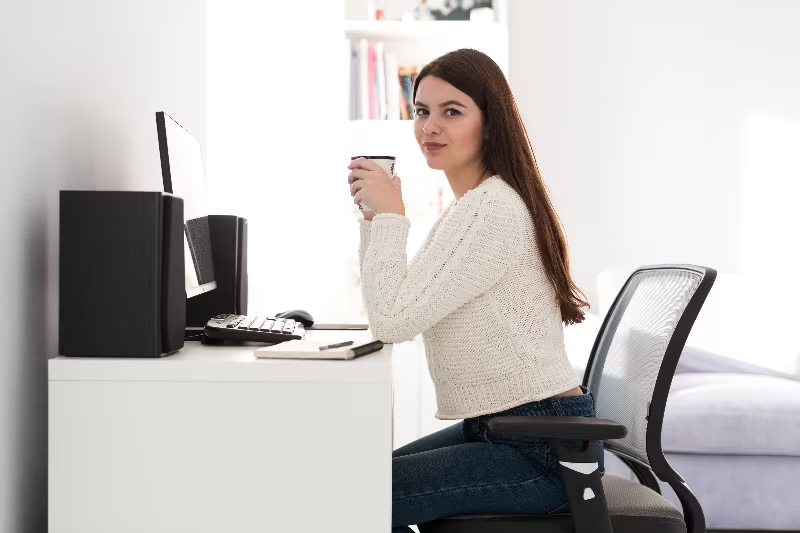
If you suffer from nagging lower back pain, stiff legs, or an inability to squat deep, the culprit is often not where you feel the pain—it’s your hips. Hours of daily sitting forces them into a fixed position, shortening the muscles on the front and deactivating the powerful muscles on the back. The result is a cascade of compensation that leads to stiffness, pain, and limited performance.
The fix isn’t just to stretch more—it’s to restore the natural function of the hip. When you consistently work on opening, activating, and rotating your hips, you counteract the negative effects of sitting, re-teach your body how to move correctly, and build a foundation for pain-free movement in everything you do.
How sitting robs your hips of their natural movement and what you can do about it.
The human hip is a dynamic ball-and-socket joint designed for a wide range of motion. However, modern lifestyles lock it into one position: flexion. This creates a chronic imbalance where the hip flexors become tight and dominant, while the glutes—the primary movers of the hip—become weak and dormant. This imbalance is a leading cause of movement dysfunction.
Think of your hips like a rusty hinge. Forcing it open with aggressive stretching won’t work. You need to gently and consistently work it back and forth through its intended patterns to restore smooth, pain-free function.
Below are three simple “pillars” for restoring hip function: re-opening the front of the hips, re-activating the back of the hips, and restoring the joint’s natural rotational capacity.
1. A true fix starts with actively opening your hip flexors.
To counteract hours of sitting, you need to open the front of your hips. But passive stretching isn’t enough. Your brain needs to know you can control this opened position. A true baseline of hip extension is best achieved by actively squeezing the glute of the trailing leg during a lunge, which tells the opposing hip flexor it’s safe to relax.
“You can’t just stretch your way out of a problem you’ve sat your way into. You have to restore function. For every hour you spend in hip flexion, you should spend at least a minute actively moving into hip extension.”
Physical Therapist
Try this: Get into a half-kneeling lunge. Instead of just leaning forward, keep your torso upright and actively squeeze the glute of the down leg. You’ll feel a much more effective stretch in the front of your hip without straining your back.
2. Small daily activation drills can wake up your dormant glutes.
Sitting effectively puts your glutes to sleep. When they don’t fire correctly, your body recruits other muscles—like your hamstrings and lower back—to do their job, leading to strain and pain. The solution is isolation: use simple exercises to remind your brain how to activate your glutes before you ask them to perform in a workout or during the day.
1. Glute bridges are the best way to re-establish the mind-muscle connection.
2. Focus on squeezing your glutes to lift your hips, not your lower back.
3. Perform 2 sets of 15 reps before any workout or after long periods of sitting.
4. This ensures your primary hip movers are awake and ready to work.
Once your glutes are firing correctly, they provide stability to your pelvis and power your movements, taking the strain off your lower back and allowing your hip flexors to relax.
Have you tried targeting your hips specifically?
I always had lower back pain and thought it was my back. A physical therapist told me to work on my hips. After two weeks of daily glute bridges and hip flexor lunges, my back pain is gone. It was my tight hips all along.
Mark T.
Reader
3. Restoring rotation is key for long-term hip health.
Healthy hips don’t just move forward and back; they rotate. This rotational capacity is essential for walking, running, and squatting, but it’s the first thing we lose from a sedentary lifestyle. Use daily rotational drills to lubricate the joint capsule and maintain its full range of motion.
Your hip joint needs rotation to stay healthy and lubricated.
Try simple drills like 90/90s or seated hip internal/external rotation.
Move slowly and with control; this is about motor control, not speed.