How To Measure Your Resting Heart Rate Correctly (And What Changes Mean)
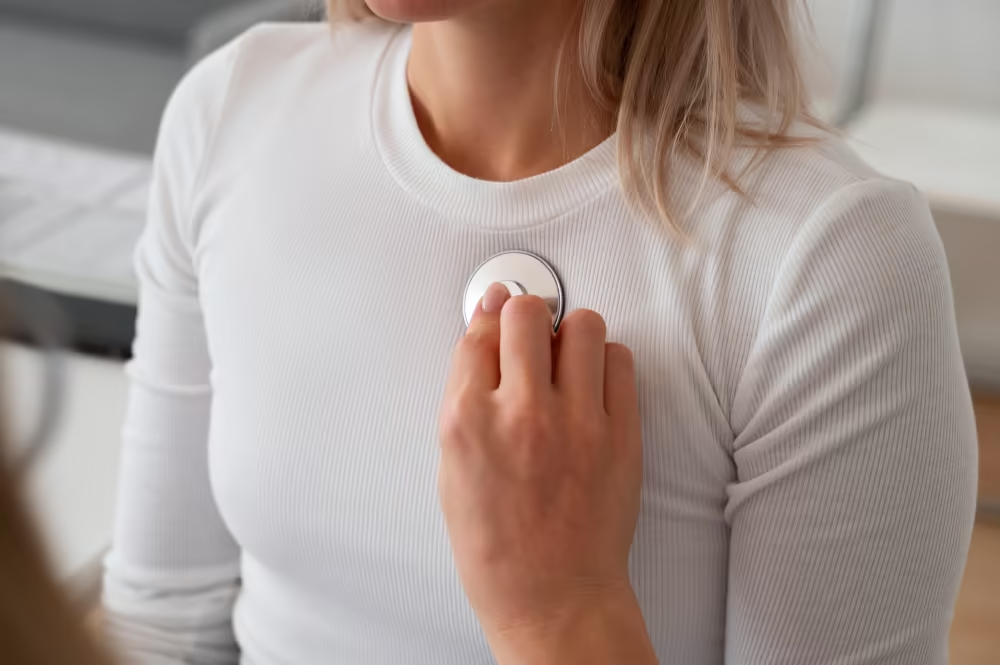
If your heart rate seems “random” from day to day, the problem usually isn’t that your body is malfunctioning—it’s measurement timing. Caffeine, stress, poor sleep, dehydration, and even checking right after you stand up can spike your number. The result is the same: confusing readings, unnecessary worry, and a metric that feels unreliable.
The fix isn’t checking constantly—it’s checking consistently. When you measure at the same time, in the same position, and track your baseline over time, resting heart rate becomes one of the simplest, most useful vitals for understanding recovery, fitness, and stress.
The many ways resting heart rate reflects recovery, stress, and overall cardiovascular load.
Resting heart rate is a snapshot of how hard your heart is working to support your body at rest. It naturally shifts with sleep quality, illness, hydration, and stress. A single high day doesn’t mean something is wrong—but a sustained change from your normal baseline can be a useful signal that your body needs more recovery.

Think of your resting heart rate like a “fuel gauge” for your nervous system. When your baseline is steady, you’re usually recovering well. When it climbs for days, it’s often a sign to slow down and support recovery.
Below are three simple “pillars” for useful heart-rate tracking: measure a true resting baseline, understand common day-to-day drivers, and use trends to decide when to push and when to recover.


1. A true resting reading starts before you move or scroll.
To measure resting heart rate, you want your body truly at rest—not reacting to movement, light, or notifications. Standing up, checking your phone, or rushing to get ready can raise your number fast. A true baseline is best captured right after you wake up, while still lying down, breathing normally.
“If you want a meaningful resting heart rate, measure it the same way each time—ideally before you stand up. Consistency is what makes the number useful.”
John Doe
Try this: wake up, stay lying down, and take a 60-second reading. If you use a device, wait until the number stabilizes. If you’re taking it manually, count beats for 30 seconds and multiply by two.


2. Small daily factors can raise your number without “something being wrong.”
Resting heart rate responds to load. Poor sleep, dehydration, stress, alcohol, illness, and hard training can all increase it—sometimes for a day or two. The solution is interpretation: look at the context around the reading and compare it to your normal baseline, not to someone else’s.
1. Dehydration often raises heart rate—start with fluids, especially after sleep.
2. Poor sleep can increase resting rate the next morning.
3. Stress and anxiety can elevate readings even if you feel “fine.”
4. Alcohol and heavy meals can raise your overnight rate.

Once you know your baseline, changes make more sense. If your resting rate is higher than usual for a few days, treat it as feedback: prioritize sleep, hydration, lighter movement, and recovery.
Have you noticed your resting heart rate changing?
I kept checking at random times and thought my heart rate was ‘all over the place.’ Once I started measuring right after waking up and tracking it for a week, it made sense. Now I can tell when I need recovery before I burn out.

3. Trend tracking helps you act early instead of guessing.
A single number is noise; a pattern is information. If your resting heart rate stays elevated for several days, it can be a sign you’re under-recovered, fighting something off, or carrying more stress than you realize. Use a 7-day baseline and watch for sustained changes—then adjust sleep, hydration, and intensity accordingly.

Log your morning resting rate for 7 days to learn your baseline.
If it rises for 3+ days, prioritize recovery before pushing hard workouts.
Pair the number with how you feel—energy, sleep, stress—to see the full picture.
Want a simple rule? Measure the same way daily, learn your baseline, then watch trends—not one-offs. That’s how heart-rate tracking becomes useful instead of stressful.